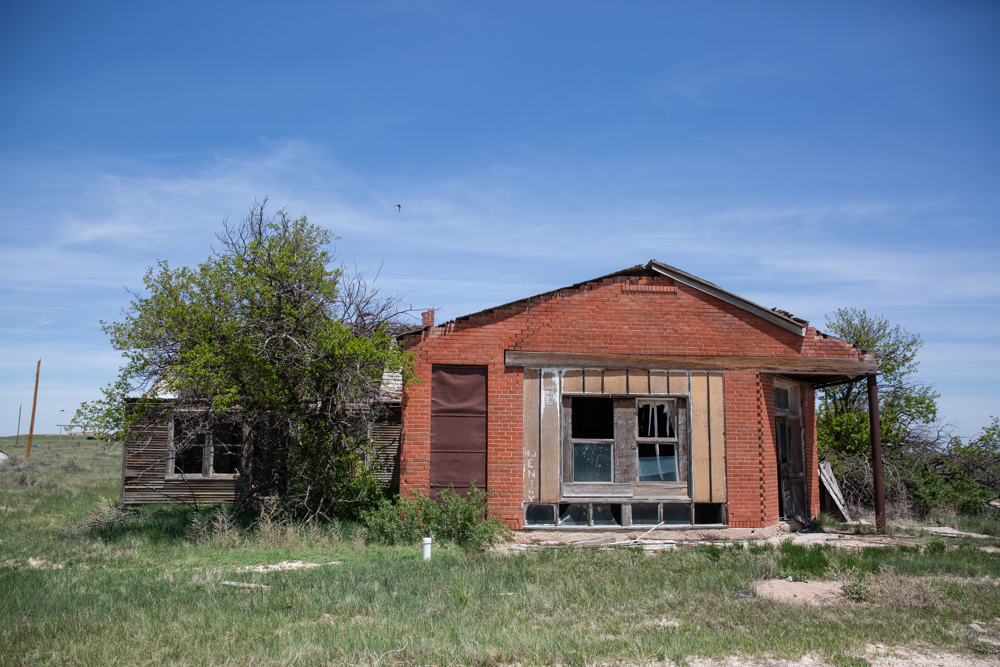
We packed the car for a drive to the Pawnee Grasslands in northeast Colorado, a swatch of 200,000 acres of short buffalo grass which is home to a variety of critters both earthbound (pronghorn, mule deer, coyote, fox) and not (mountain plovers, burrowing owls, and the lark bunting, the state bird.)

The big scenic draw for most folks are the Pawnee Buttes, a couple of majestic slabs rising from the plains several miles into the expanse.
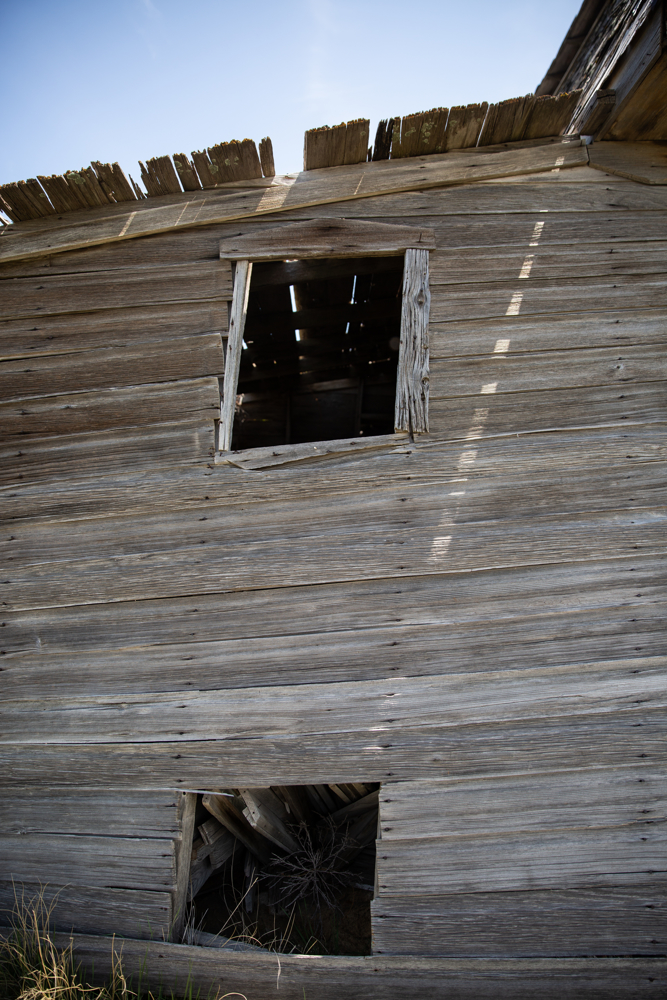
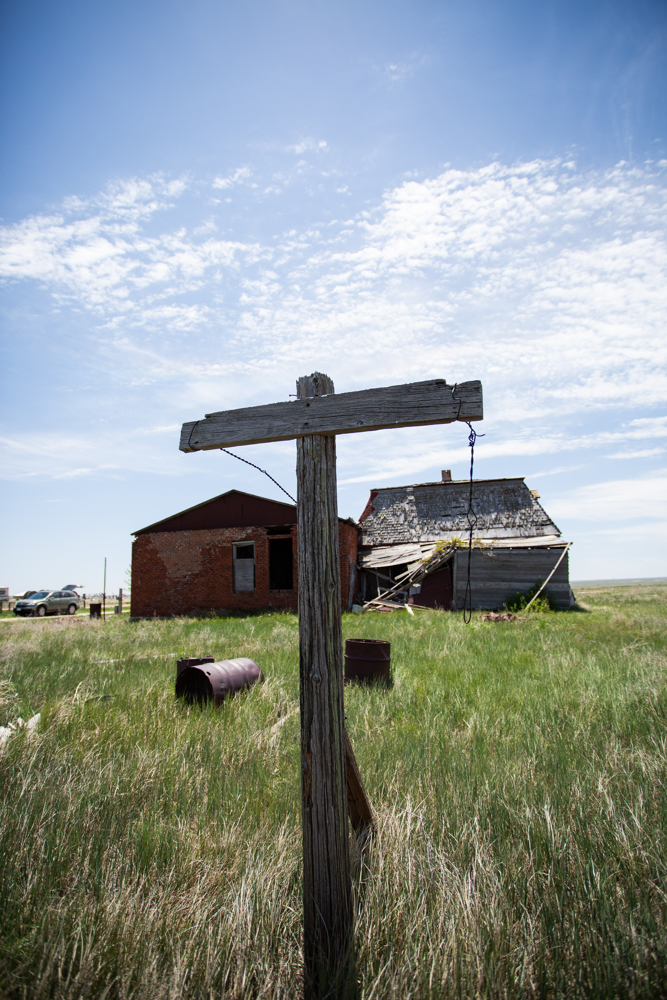
We got some pics of the buttes, sure, but Mara’s eye was drawn more forcefully to the decaying husk of this house on the main drag (the only drag) in the small town of Keota, not much more than a dirt crossroads standing on a gentle rise amid the surrounding flatlands.
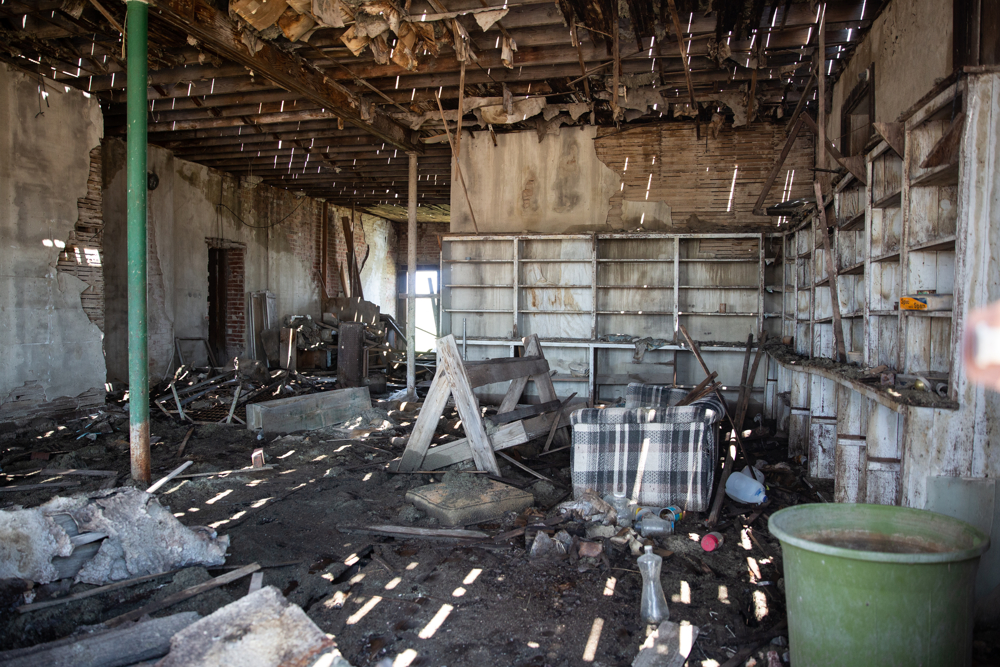
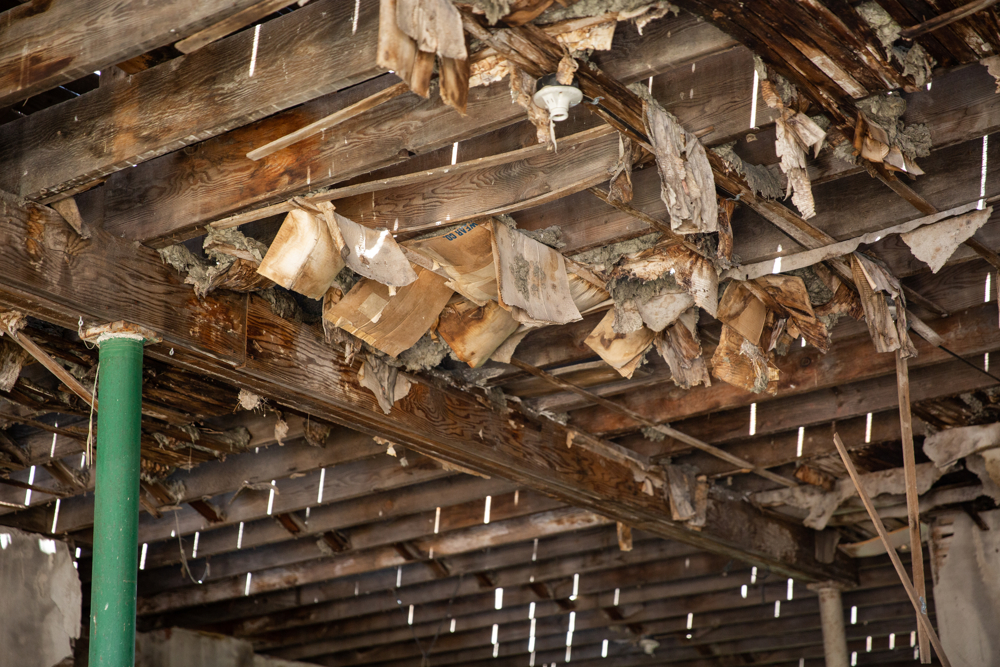
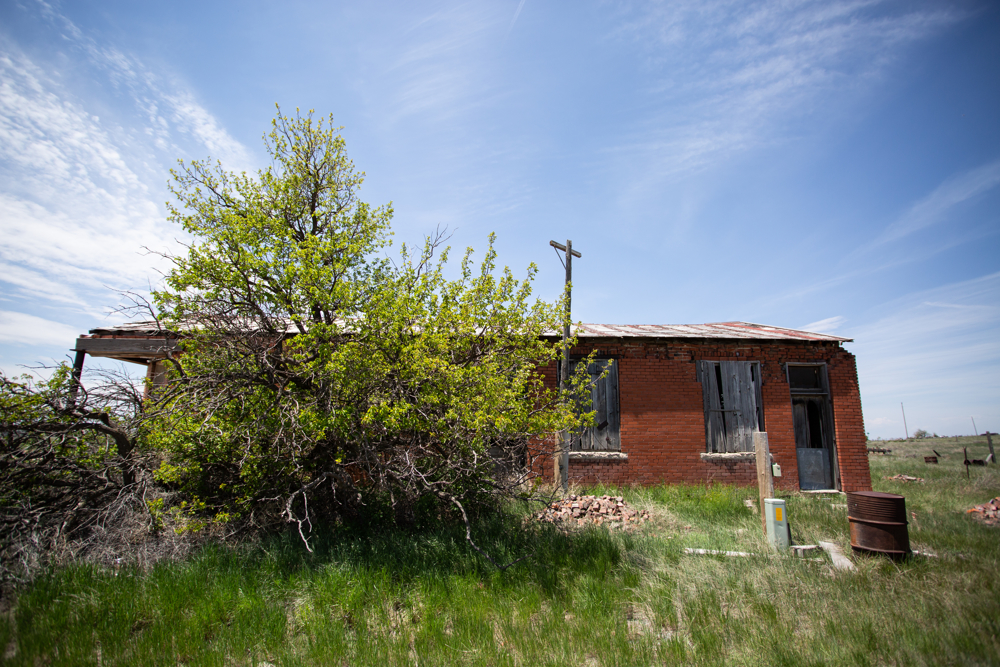
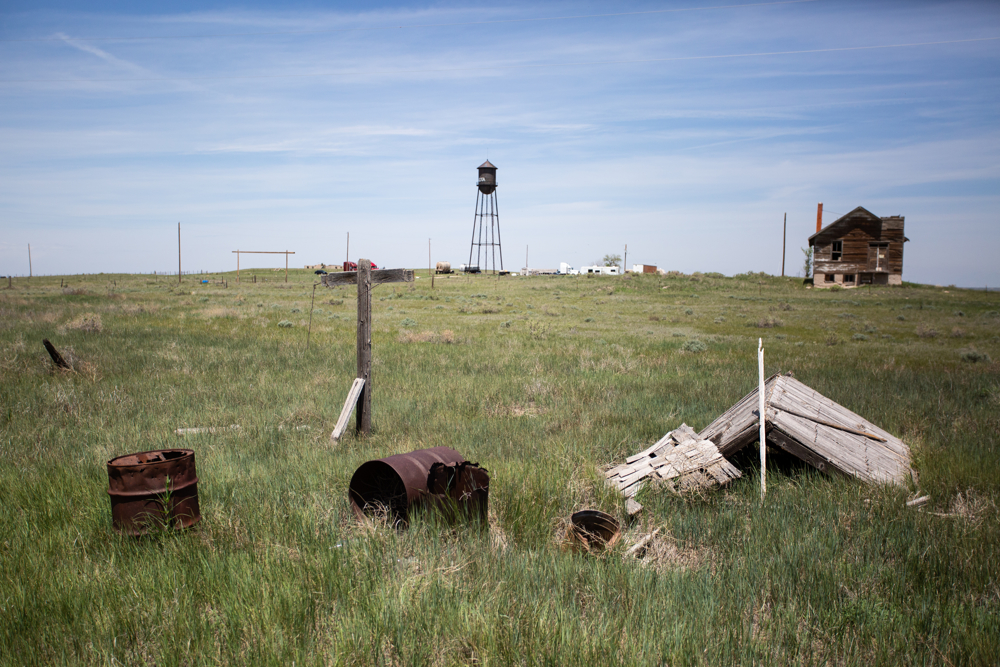
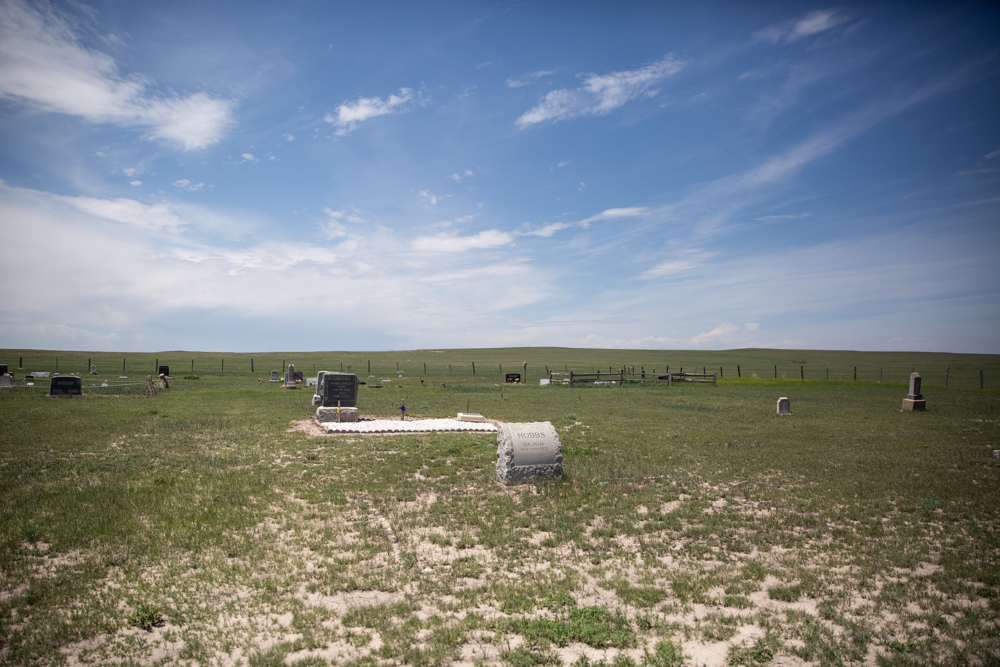
Keota is an empty place that was once home to actual people. It is now a wash of weathered brick and busted up wood.

Keota was founded by homesteaders in the late 1800’s who moved west from Nebraska to claim land under the Homestead Act.
Despite the unforgiving environment, the early residents of the town were able to wring sustenance from the land for many decades, highly dependent on the rainfall, the winds, and their mastery of “dry farming” techniques, which shrewdly matched particular dry-climate crops to seasonal rainfall patterns.

In the early 1900’s the weather and soil conditions — not to mention the grit and determination of the settlers — proved able to sustain a local economy based on wheat, barley, rye and livestock.

If it was never actually thriving, in the modern sense, the town supported a lifestyle grounded in the ways of the great plains.
The town was home to a post office and a local newspaper. The younger generation was educated at the high school while their older brothers and sisters, 29 in all, went off to fight in WWI. (27 returned.)

The foundation of the town was always somewhat fragile, however. Then the Dust Bowl laid it to waste.

Already dry, the land grew less forgiving as the winds rages across the Midwest. Many abandoned the town.

It was the beginning of a long, slow decline.

Through the 1970’s, a railway continued to link through Keota, and the newspaper printing press continued to be used for other commercial uses.

By century’s end, the census count was 5.
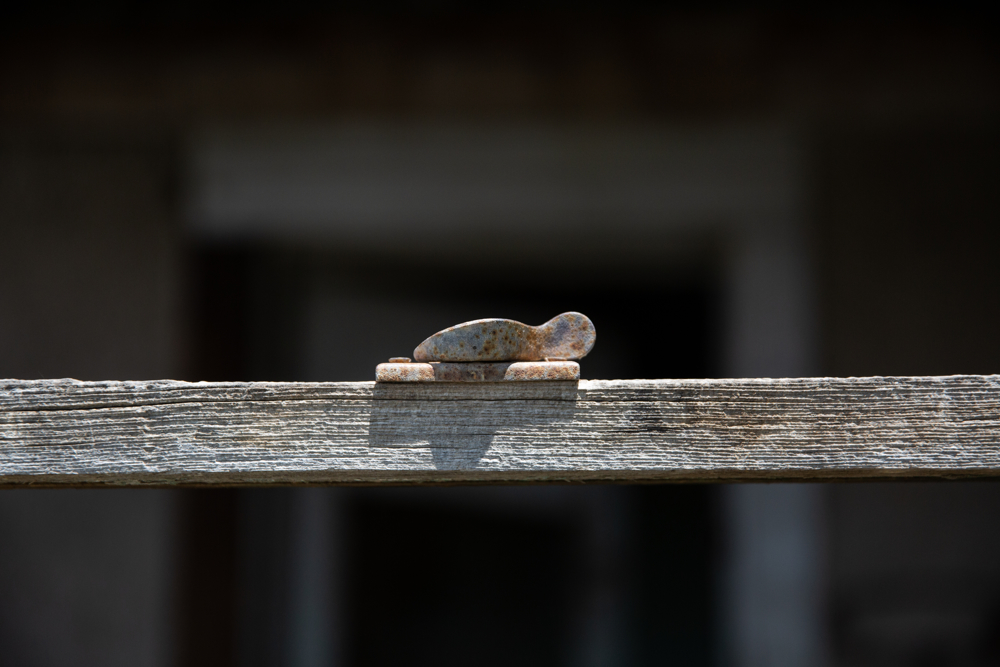
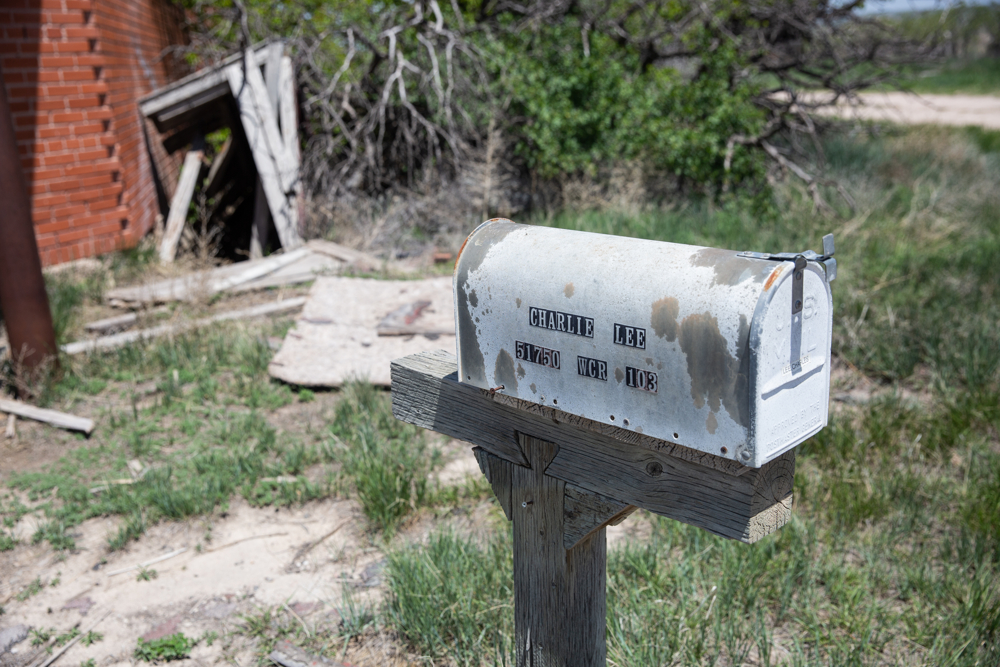
The last resident of the house shown in these photos was Charles Lee, a county roads maintenance man.




 Cafe Decay
Amazing photos and poetic commentary. Impermanence is not always “pretty” but you find the beauty.